
 Mark
 Darrell
 Mike
When it comes to agriculture, the importance of light in plant cultivation cannot be overstated. Light isn’t just a source of energy; it’s a critical signal that guides a plant’s growth, morphology, and even its chemical composition. For cannabis cultivators, understanding how light impacts the vegetative and flowering stages is the cornerstone of optimizing yield and quality.
The Power of Natural Sunlight in Cannabis Growth
Natural sunlight is often referred to as the “perfect spectrum.” It provides a full range of light wavelengths—from ultraviolet (UV) to X-rays—that plants have evolved under for millions of years. This full-spectrum light, particularly within the range of Photosynthetically Active Radiation (PAR), is critical for cannabis growth.
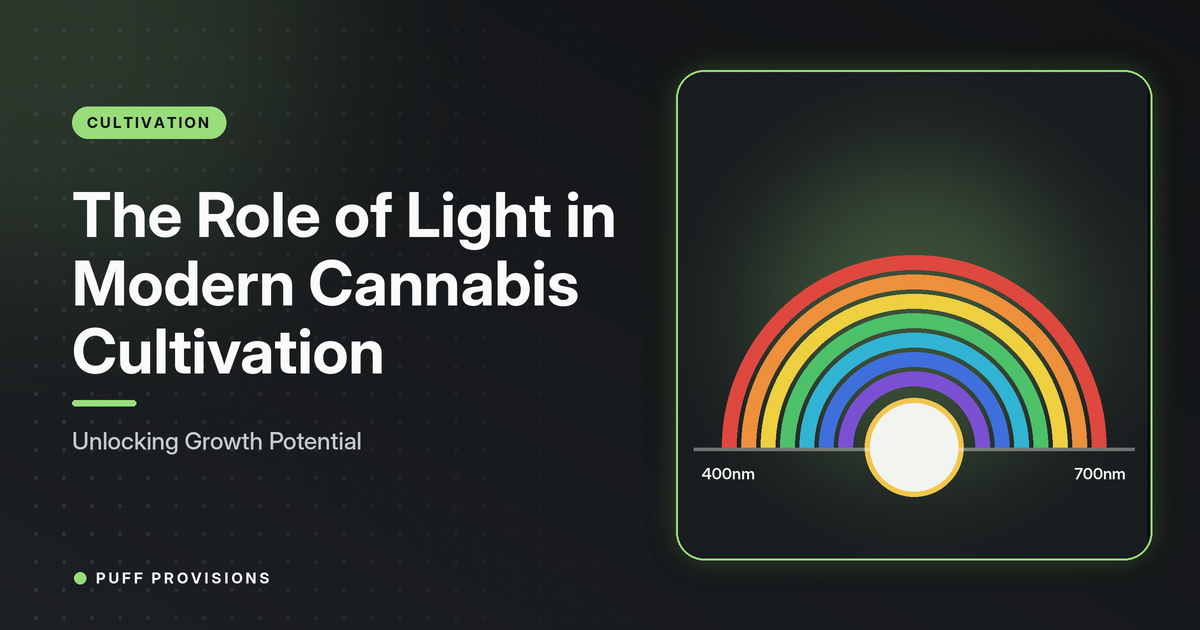
PAR, which spans wavelengths between 400 and 700 nanometers, serves dual purposes for cannabis: energy production and signaling. Blue light promotes the production of THC and essential oils, while red and orange wavelengths trigger the flowering stage.
Artificial Lighting: Revolutionizing Indoor Cultivation
For indoor cultivation, artificial lighting mimics the sun’s influence on cannabis. Growers now have a variety of light technologies at their disposal:
- High-Intensity Discharge (HID): Includes metal halide (MH) and high-pressure sodium (HPS) lights. MH provides an optimal blue spectrum for vegetative growth, while HPS excels in the red spectrum for flowering.
- Ceramic Metal Halide (CMH): A more efficient alternative to MH, offering up to 20% better performance using ceramic elements.
- Light Emitting Diodes (LEDs): A game-changer, offering high controllability, reduced heat output, and energy efficiency.
- Plasma Lights: Uniquely suited for increasing UVB exposure, which is critical for THC and essential oil production.
The Role of UV Light in THC and Essential Oil Production
UV light plays a vital role in cannabis cultivation, particularly in the production of THC and essential oils. UV wavelengths between 10 and 400 nanometers significantly enhance the plant’s chemical profile. Outdoor-grown cannabis benefits from natural UV exposure, while indoor growers can replicate this by incorporating plasma lights to boost UVB levels.
Balancing Light and Temperature for Optimal Growth
Temperature and light work hand in hand to optimize photosynthesis and overall plant health. For cannabis, leaf temperatures around 85°F (29°C) are ideal, allowing plants to absorb light efficiently up to a saturation point of about 1,500 µmol/m²/s. Exceeding this threshold can lead to a drop in photosynthesis rates.
The Rise of Mixed Lighting in Cannabis Cultivation
Mixed lighting combines natural sunlight with artificial light to create a consistent and high-quality product. The benefits include year-round consistency in quality and yield, enhanced UV exposure, and multiple harvest cycles per year.